Posted on Leave a comment

What is a 990 Form?: A Nonprofit’s Guide

what is a 990 form

Also, D doesn’t qualify as an independent member of the organization’s governing body because D receives indirect financial benefits from the organization through M that are reportable on Schedule L (Form 990), Part IV. Z was reported as one of Y Charity’s key employees on Y’s Form 990 filed for 1 of its 5 prior tax years. During Y’s tax year, Z wasn’t a current officer, director, trustee, key employee, or highest compensated Accounting For Architects employee of Y. For the calendar year ending with or within Y’s tax year, Z received reportable compensation of $90,000 from Y as an employee (and no reportable compensation from related organizations).

What are the penalties for late filing or incorrect filing of Nonprofit Form 990?

This amount represents the change in market value of investments that weren’t sold or exchanged during the tax year.Line 6. Report the value of services or use of facilities donated to the organization (net of services or use of facilities donated by the organization) reported as income or expense in the financial statements.Line 8. Report the net prior period adjustments during the tax year reported in the financial statements. Prior period adjustments are corrections of errors in financial statements of prior years, or changes in accounting principles applied to such years. The errors may include math errors, mistakes in applying accounting principles, or oversight or misuse of facts that existed at the time the financial statements were prepared.Line 9. Enter the total amount of other changes in net assets or fund balances during the year.

what is a 990 form

What Is Form 990: Return of Organization Exempt From Income Tax?

For example, don’t check both the “Former” and “Officer” boxes for a former president of the organization who wasn’t an officer of the organization during the tax year. All organizations are required to complete Part VII, and when applicable, Schedule J (Form 990), for certain persons. Compensation must be reported for the calendar year ending with or within the organization’s tax year. In some cases, compensation from an unrelated organization must be reported on Form 990.

E-file your Nonprofit Tax Form 990 with our Software

IRS Form 990, the full-length version, is arguably the most detailed tax return the average person is likely to encounter. While there are certainly IRS tax forms that are equally complex, most are used for very targeted situations, not for a standard return required to be filed by an entire class of organizations. In this post, our 4th in this series, we’re going to dig in and see what Form 990 is all about and why it is so important. The 990 is the tax form the Internal Revenue Service (IRS) requires all 501(c)(3) tax-exempt charitable and non-profit organizations to bookkeeping and payroll services submit each year. In reality, it is a powerful marketing tool for not-for-profit organizations. The 990 gives the organization the ability to describe its overall mission and is an important document for perspective funders to review the organization’s operating efficiency and its financial results.

  • This page provides resources and tools for tax-exempt organizations relating to annual filing requirements and 990-series forms.
  • A public charity described in section 170(b)(1)(A)(iv), 170(b)(1)(A)(vi), or 509(a)(2) that isn’t within its initial 5 years of existence should first complete Part II or III of Schedule A (Form 990) to ensure that it continues to qualify as a public charity for the tax year.
  • For instance, answer “No” if the organization made a $4,000 grant to each of two domestic organizations and no other grants.
  • If line 7 is less than $500,000, the organization is not subject to the section 4968 excise tax on net investment income and the organization should answer “No” on line 16.
  • If you have questions about your eligibility for the Form 990-N, you can review the IRS’s frequently asked questions for this form.
  • Use column (C) to report expenses that relate to the organization’s overall operations and management, rather than to fundraising activities or program services.

An organization that answers “No” should consider whether to complete Schedule G (Form 990) in order to report its fundraising activities or gaming activities for state or other reporting purposes. Answer “Yes” if the organization received separate, independent audited financial statements for the year for which it is completing this return, or if the organization is reporting for a short year that is included in, but not identical to, the period for which the audited financial statements were obtained. All other organizations answer “No.” Answer “No” if the organization was included in consolidated audited financial statements, unless the organization also received separate audited financial statements.

How do I file a 990?

what is a 990 form

This form facilitates transparency regarding financial activities and governance, as well as ensures compliance with federal tax obligations. Section 4958 doesn’t affect the substantive standards for tax exemption under section 501(c)(3), 501(c)(4), or 501(c)(29), including the requirements that the organization be organized and operated exclusively for exempt purposes, and that no part of its net earnings inure to the benefit of any private shareholder or individual. The legislative history indicates that in most instances, the imposition of this intermediate sanction will be in lieu of revocation. The IRS has indicated that the following factors will be considered (among other facts and circumstances) in determining whether to revoke an applicable tax-exempt organization’s exemption status where an excess benefit transaction has occurred. An organization’s completed Form 990 or 990-EZ is available for public inspection as required by section 6104.

what is a 990 form

If the organization receives a quid pro quo contribution of more than $75, the organization must provide a disclosure statement to the donor. Special rules apply to charitable contributions of motor vehicles, boats, or airplanes with a claimed value of more than $500. 4302, A Charity’s Guide to Vehicle Donation; and the Instructions for Form 1098-C, Contributions of Motor Vehicles, Boats, and Airplanes.Substantiation and disclosure requirements for charitable contributions. The Form 990 or 990-EZ information made available for public inspection by the IRS can differ from that made available by the states. The deadline for filing Form 990 or 990-EZ with the IRS differs from the time for filing reports with some states.

what is a 990 form

Charities and nonprofits topics

See General Instructions, Section D, earlier, for additional information about accounting periods. They help in preparing future returns and in making computations when filing an amended return. The organization’s records should be kept for as long as they may be needed for the administration of any provision of the Internal Revenue Code.

Posted on Leave a comment

A Beginner’s Guide to Filing a Form 990 for Nonprofit Organizations

what is a 990 form

Organizations that report more than $15,000 on line 9a must also answer “Yes” on Part IV, line 19, and complete Part III of Schedule G (Form 990). Fundraising events sometimes generate both contributions and income, such as when an individual pays more than the retail value for the goods or services furnished. Report in parentheses the total amount from fundraising events that represents contributions rather than payment for goods or services. The stock is delivered to the charity’s broker, who sells it on the same day and remits the sales proceeds, net of commissions, to the charity.

Schedule of Contributed Support (Schedule B)

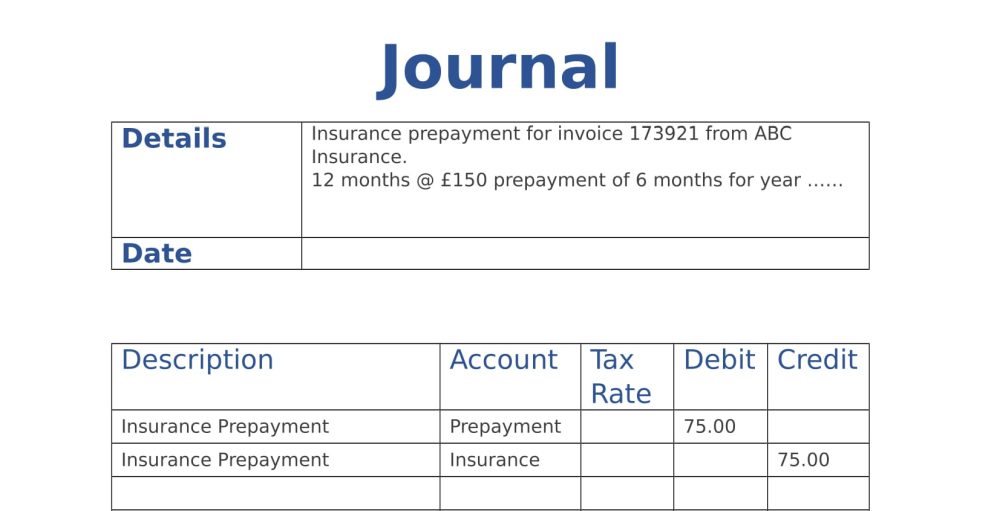
Examples include prepayments of rent, insurance, or pension costs, and expenses incurred for a solicitation campaign to be conducted in a future accounting period. In column (A), enter the amount from the preceding year’s Form 990, column (B). If the organization was excepted from filing Form 990 for the preceding year, enter amounts the organization would have entered in column (B) for that year. If this is the organization’s first year of existence, enter zeros on lines 16, 26, 32, and 33 in column (A). Enter the amount that the organization, at its own discretion, paid in grants to domestic organizations and domestic governments. United Way and similar federated fundraising organizations should report grants to member or participating agencies on line 1.

Certain goods or services provided to donor’s employees or partners.

While some states may require reporting according to ASC 958, the IRS doesn’t. However, a Form 990 return prepared according to ASC 958 will be acceptable to the IRS. For purposes of Schedule F (Form 990), Statement of Activities Outside the United States, include grantmaking, fundraising, unrelated trade or business, program services, program-related investments, other investments, or maintaining offices, employees, or agents in particular regions outside the United States. Enter the total of (a) all pledges receivable, less any amounts estimated to be uncollectible, including pledges made by officers, directors, trustees, key employees, and highest compensated employees; and (b) all grants receivable. Enter the total expenses incurred by the organization in conducting meetings related to its activities. Include such expenses as facility rentals, speakers’ fees and expenses, and printed materials.

Goods or services with insubstantial value.

Also, an organization that files Schedule B must report certain information on noncash contributions. To avoid the imposition of the 200% tax, a disqualified person must correct the excess benefit transaction during the tax period. The tax period begins on the date the transaction occurs and ends on the earlier of the date the statutory notice of deficiency is issued or the section 4958 taxes are assessed. This 200% tax can be abated if the excess benefit transaction is subsequently corrected during a 90-day correction period. As a general rule, in the case of a nonfixed payment, no rebuttable presumption arises until the exact amount of the payment is determined, or a fixed formula for calculating the payment is specified, and the three requirements creating the presumption have been satisfied.

Do I Need to File State Forms as Well?

A significant part of running an effective nonprofit organization is maintaining strong financial management—and a major aspect of financial management is filing your annual nonprofit tax return. Form 990 provides the government and the public with an overview of an organization’s activities for the year. Donors may use Form 990 to assess an organization’s financial health and governance before contributing. The IRS requires extensive information from each organization, and the instructions for completing the form span 100 pages.

what is a 990 form

Documentation permitted by state law can include approved minutes, email, or similar writings that explain the action taken, when it was taken, and who made the decision. For this purpose, contemporaneous means by the later of (1) the next meeting of the governing body or committee (such as approving the minutes of the prior meeting), or (2) 60 days after the date of the meeting or written action. If the answer to either line 8a or 8b is “No,” explain on Schedule O (Form 990) the organization’s practices or policies, if any, regarding documentation of meetings and written actions of its governing body and committees with authority to act on its behalf. If “Yes,” describe on Schedule O (Form 990) the class or classes of such persons, the decisions that require their approval, and the nature of their voting rights. Answer “Yes” if the organization became aware during the organization’s tax year of a significant diversion of its assets, whether or not the diversion occurred during the year. If “Yes,” explain the nature of the diversion, dollar amounts and/or other property involved, corrective actions taken to address the matter, and pertinent circumstances on Schedule O (Form 990), although the person or persons who diverted the assets shouldn’t be identified by name.

  • A payment by a governmental agency to a medical clinic to provide vaccinations to the general public is a contribution reported on line 1e.
  • Section B requires reporting of the five highest compensated independent contractors.
  • See Appendix I. Use of Form 990 or 990-EZ To Satisfy State Reporting Requirements.
  • See Appendix D. Public Inspection of Returns, and the Instructions for Schedule B (Form 990) for more details.
  • Every year, each subordinate organization must authorize the central organization in writing to include it in the group return and must declare, under penalties of perjury, that the authorization and the information it submits to be included in the group return are true and complete.
  • Public Inspection IRC 6104(d) regulations state that an organization must provide copies of its three most recent Forms 990 to anyone who requests them, whether in person, by mail, fax, or e-mail.

Appendix F. Disregarded Entities and Joint Ventures—Inclusion of Activities and Items

  • An accounting method for an item of income or deduction may generally be adopted separately for each of the taxpayer’s trades or businesses.
  • For example, report expenses for employee events such as a picnic or holiday party on line 9.
  • However, because the 25% gift shop discount to K’s employees differs from the 10% discount offered in the basic membership benefits package, J’s disclosure statement must describe the 25% discount but need not estimate its value.
  • Report on line 25 (and not line 23) any secured mortgages and notes payable to related organizations.

Many items of compensation may or may not be taxable or currently taxable, depending on the plan or arrangement adopted by the organization and other circumstances. The list attempts to take into account these varying facts and circumstances. The list is merely a guideline to report amounts for those persons required to be listed. In all cases, items included in box 1 or 5 of Form W-2 (whichever is greater), in box 1 of Form 1099-NEC, and/or in box 6 of Form 1099-MISC are required to be Certified Bookkeeper reported on Part VII, Section A, and, for applicable persons, Schedule J (Form 990), Part II, column (B). Items listed as “taxable” or “taxable in current year” are currently includible in reportable compensation, but aren’t necessarily subject to federal income tax in the current year.

  • A diversion of assets can in some cases be inurement of the organization’s net earnings.
  • Section 501(c) organizations, and Section 527 organizations use Schedule C (Form 990 or 990-EZ) to furnish additional information on political campaign activities or lobbying activities.
  • For an employee who works on fundraising 40% of the time and program management 60% of the time, an organization must allocate that employee’s salary 40% to fundraising and 60% to program service expenses.
  • Applications filed before July 15, 1987, need not be made publicly available unless the organization had a copy on July 15, 1987.
  • However, if the tenant’s activities aren’t program related, report the rental income on Part VIII, line 6a, and related rental expenses on Part VIII, line 6b.
  • If the organization’s short year began in 2024, and ended before December 31, 2024 (not on or after December 31, 2024), it may use either 2023 Form 990 or 2024 Form 990 to file for the short year.

what is a 990 form

Unrelated Business Income Tax (UBIT) applies to income generated by nonprofits from activities unrelated to their primary purpose. Certain nonprofits with unrelated business income must file Form 990-T in addition to their annual return. Complying with UBIT regulations avoids potential tax liabilities and maintains tax-exempt status. Adhering to IRS filing requirements is crucial for maintaining tax-exempt status. Nonprofits must annually file the correct version of Form 990 to stay compliant and transparent.

Used to notify the IRS of a change in mailing address that occurs after the return is filed. The Patient-Centered Outcomes Research fee is imposed on issuers of specified health insurance policies (section 4375) and plan sponsors of applicable self-insured health plans (section 4376) for policy and plan years ending on or after October 1, 2012. On IRS.gov, you can get up-to-date information on current events and changes in tax law. An organization that has a permanent office, but has no office hours, or very limited hours during certain times of the year, must make its documents available during those periods when office hours are limited, or not available, as though it were an organization without a permanent office. The IRS can’t disclose portions of an exemption application relating to any trade secrets, etc. Additionally, the IRS generally can’t disclose the names and addresses of contributors.

what is a 990 form

Effective bookkeeping is a vital component of successful nonprofit management, supporting the organization’s mission and long-term sustainability. Organizations should also utilize reminders and scheduling tools to ensure that all filings are completed on time. By prioritizing timely submission, nonprofits can avoid costly penalties and maintain their tax-exempt status.

Enter on Schedule O (Form 990) the parts and schedules of the Form 990 that were amended and describe the amendments. Some lines request information reported on other forms filed by the organization (such as Forms W-2, 1099, and 990-T). If the organization is aware that the amount actually reported on the other form is incorrect, it must report on Form 990 the information that should have been reported on the other form (in addition to filing an amended form with the proper amount).

Posted on Leave a comment

Accounts Payable Journal Entry Example

journal entry accounts payable

To work productively, you need to design an efficient system to manage the payment process. He draws from his studies of economics and multiple years of bookkeeping experience where he helped businesses understand and measure their financial health. Both can throw off your accounting and trigger a need to audit the books, an unnecessary time sink.

Entering an invoice payment

These internal controls help you to prevent paying a fraudulent or inaccurate invoice. Also, it avoids scenarios where you might pay the vendor twice for the same bill. The AP department has to set ground rules and processes to follow before making the vendor payment. These guidelines and control over the accounts payable process are essential to avoid errors caused due to manual work.

How do you show the Accounts Payable Payment?

This is where Constant steps in by automating and streamlining the AP process. These controls ensure that all transactions are authorized, recorded accurately, and reviewed periodically for correctness and completeness. Implementing robust internal controls is essential for maintaining the integrity and accuracy of accounts payable transactions.

  • Accounts payable (AP) are recorded under the current liabilities section on your balance sheet.
  • In some companies, approval is required before issuing a payment voucher to the vendor.
  • Accounts payable are shown on the liability side under the head current liabilities (the left-hand side of a horizontal balance sheet).
  • We also integrate with leading accounting software like NetSuite, QuickBooks, and Sage Intacct to help simplify the process of making your AP journal entries.

When Goods are Sold on Credit

However, services related to the direct business operations will be recorded in the accounts payable section and others in the trades payable sub-section. An increase in accounts payable means the company is making more purchases on credit. Contrarily, an increase would mean purchasing on cash terms or with a short account payable cycle. The $500 debit to office supply expense flows through to the income statement at this point, so the company has recorded the purchase transaction even though cash has not been paid out.

journal entry accounts payable

How Ramp became KIPP Nashville’s biggest financial win

These payment entries ensure the payables are cleared on time and the business maintains good relations with its vendors since a consistent fund management system is followed. A transactions listing is a compiled list of all debits and credits in your general ledger (GL) for a specific period. free income tax calculator 2020 Therefore, your AP transactions listing lists only debits and credits that hit your accounts payable account. This report can be helpful if you need to see individual journal entries in your GL accounts. ABC Co. eventually settles half of the amount in the same accounting period.

Accounts Payable Journal Entry: A Complete Guide with Examples

But you can prepare for your audit by cleaning up operations and protocols. When auditors look at accounts payable, they’ll want to see that you’re following AP best practices. Following these guidelines can make the auditing process go a lot more smoothly. Finally the credit shows that cash went out of the business with the payment of the supplier. Let us say a supplier extends credit to your business Unreal Pvt Ltd. and agrees that your business will be making a payment within 45 days of the date you are billed. Discover how to do a cash flow analysis and learn to monitor, forecast, and optimize your cash flow to ensure your business’s financial stability and growth.

Accounts payable is a liability account, similar to accrued expenses, customer deposits, or interest payable. Opposite of asset accounts, liability accounts increase with a credit. Receivables represent funds owed to the firm for services rendered and are booked as an asset. Accounts payable, on the other hand, represent funds that the firm owes to others and are considered a type of accrual.

Accounts payable are balances in the balance sheet representing money owed to suppliers. In accounting, accounts payable represent an obligation to repay the party at a future date. This definition classifies these balances as liabilities in the balance sheet.

In double-entry accounting, a credit is always entered as part of the transaction if there is an increase in Accounts Payable. On the other hand, a growth in Accounts Receivable is never recorded as a credit in the accounting books. In a neighbourhood, Super Electronics offers televisions with larger screens.

Accounts Payable journal entries are recorded in accounting books according to a procedure. In the context of accounts payable journal entries, liabilities mainly refer to the amounts owed to creditors. Whenever a business makes purchases on credit, the liabilities increase, reflecting in the accounts payable.

The former increases the account balance while the other decreases it. Apart from these, other transactions can also impact the accounting for accounts payable. Accounts payable are liabilities in the balance sheet since they represent obligations due to past events.

Posted on Leave a comment

FASB ASU 2018-08 Clarifies Revenue Accounting for Nonprofit Grants and Contracts: CLA CliftonLarsonAllen

What is The Difference Between Government and Nonprofit Accounting

Donor management software can complement your financial strategy by helping you retain donors. Knowing who to contact and when is about having the correct details about your supporters. The board should make financial decisions based on the organization’s best interest as a whole and not their personal ties. The more space you can create, the more sound financial advice your board can produce to support long and short-term goal setting.

  • Aside from these fundamental differences, there are several other characteristics worth mentioning.
  • We aim to help you better understand how to introduce compliant and efficient practices that support your organization’s growth.
  • The issue of taxes is a crucial differentiator between accounting for nonprofit and for-profit organizations.
  • Directors often get caught up daydreaming about all the money they’ll raise while they’re planning their fundraising strategy.
  • There are additionally 86 optional quizzes for you to use to review key concepts.
  • In conclusion, governmental and non-profit financial accounting differ significantly.

Contact Capital Business Solutions for Nonprofit Accounting Software Solutions Today

But proper accounting (and the analysis it lets you do) is crucial to the survival of your organization. Zeffy’s absolutely free donor management solution securely stores and organizes your donor and member data so you can easily engage with the right supporter at the right time. The more you know about https://www.bookstime.com/articles/net-realizable-value your donors, the better your relationship-building initiatives can be. As you learn from how supporters gave in the past, to which campaigns and amounts, your financial forecasting becomes far more accurate. Accounting involves close attention to detail and a deep understanding of the organization.

What is The Difference Between Government and Nonprofit Accounting

Should you hire or outsource for nonprofit accounting?

Since nonprofits don’t have owners or stockholders, they report donor contributions instead. Donor contributions can be categorized into unrestricted, temporarily restricted, or permanently restricted. An example of donor restrictions is when donors earmark amounts for specific purposes. You may want to hire an experienced nonprofit accounting team to track your restricted funds to keep your donors happy and your funding safe.

  • For the most part, however, cash flow statements for non and for-profits are very similar.
  • Expenses should be clearly defined, budgeted for, tracked ongoingly, and regularly monitored and reevaluated.
  • Lastly, we will identify the two components of nonprofit net assets and differentiate between conditional and unconditional promises to give.
  • And it doesn’t mean that all of the activities your nonprofit spends money on aren’t taxable.
  • A nonprofit will need to provide receipts so donors can write off these donations.

Reciprocal versus nonreciprocal transactions

What is The Difference Between Government and Nonprofit Accounting

Lastly, we will cover governance issues that arise in nonprofit boards and discuss how to analyze financial statements. Government bodies follow the GASB as well as the Generally Accepted Accounting Principles (or GAAP), in order to form the COMPREHENSIVE ANNUAL FINANCIAL REPORT (CAFR). This nightmarish sounding document is the absolute culmination of all manner of revenue gain, financial statements, and budget comparison, in order to analyze a total financial status.

What is The Difference Between Government and Nonprofit Accounting

grant allocation mistakes and best practices for…

  • An exchange transaction is when the grantor directly receives something in exchange for the funds provided of approximate equal value, such as goods or services that the grantor directly receives.
  • You must complete and pass all 8 quizzes with 80% or better to successfully complete the course.
  • Kristen Slavin is a CPA with 16 years of experience, specializing in accounting, bookkeeping, and tax services for small businesses.
  • To complete Form 990, you’ll need to provide information about your organization, its mission, and how it’s achieving its goals.
  • Managing a nonprofit organization’s overhead (management and general) expenses is just as important as managing program and fundraising expenses.
  • There’s a lot of hidden costs invested in a product by the time you sell it.

Form 1099 isn’t required for all nonprofits, but it will be relevant for any organization hiring temporary contractors, freelance support, or awarding prizes at events like a raffle. Nonprofits and for-profits commonly operate under the Financial Accounting Standards Board (FASB). These standards are defined under GAAP and have slightly different rules for nonprofits. government and nonprofit accounting Spreading awareness is the only way to make an impact in any large measure, so share what you know about these financial statements with others. Lastly, ensure accountability by requiring all major expenditures to be approved by your board or another authorized party. Conduct regular internal audits to confirm that expenses are being properly reported.

What is The Difference Between Government and Nonprofit Accounting

When mapping out your process, it’s helpful to understand how accounting and bookkeeping work together and how they differ. Your plan should also include other factors beyond money, such as ways your environmental commitments might change, or how your mission statement might expand in the future. The reason for the difference is that non-profit organizations do not have owners, meaning there can’t be shareholders’ equity.

The app offers extensive analytics, providing real-time insights into key financial metrics like revenue, expenses, cash flow, and account balances. Fortune App stands out in financial management for its simplicity and powerful AI-driven features. It’s designed to automate complex accounting tasks, offering non-profits and government entities a minimalistic yet in-depth financial management approach. A crucial aspect of governmental accounting is monitoring and controlling budgets. It ensures that government spending aligns with approved budgets, reflecting responsible financial management. As non-profits are different types of organizations, they utilize a specialized accounting system, often called “fund accounting,” to handle their financial operations effectively.

What Are Nonprofit Accounting and Best Practices?

  • Planning ahead of time means garnering early support from your board of directors.
  • Accounting involves the systematic process of recording financial transactions.
  • This method tracks income and expenses in separate funds to distinguish the sources of your revenues and expenses.
  • One major difference between the statement of activities and the income statement is that instead of calculating net “profit,” the statement of activities calculates changes in net assets.
  • Tax-exempt nonprofit employees are still subject to employment taxes, and your nonprofit could still be subject to sales, real estate and other taxes depending on which state it’s based in.
Posted on Leave a comment

Top 10 Best Accounting Software For Travel Agencies Updated 2024 List

travel agents accounting system

Accounting software dramatically reduces these risks by automating calculations and record-keeping, thereby improving the overall accuracy of your financial data. TravelPerk stands at the forefront of corporate travel solutions with its advanced booking and management platform. This system is transforming the way companies approach their travel requirements, catering to businesses of every size. With flexibility in billing and invoicing, extensive reporting features, and support for major payment gateways, PHPTRAVELS ensures an all-rounded solution for any business in the travel industry. Further enhancing its suite of features, PHPTRAVELS offers social integration, facilitating connections with your customers on popular social media platforms. It also includes a newsletter tool for personalized communication and a comprehensive review management system to capture and respond to customer feedback.

Zoho’s Travel Agency CRM: A comprehensive tool from an industry leader

The software automatically identifies errors, making TravelWorks a valuable resource for managing commissions and keeping on top of accreditation requirements. TravelWorks is a software program that makes things easier for Travel Agents and Accounting Managers. TravelWorks simplifies commission management by organizing it all in one place – even when agents share commissions. It will only take 5 minutes or even less to start your website for your travel agency and will help take your marketing, reputation, and direct selling efforts to another level. With Bluehost, you can get your domain name and professional email address for a low monthly price.

  • Zoho’s lead capture software can be downloaded directly to CRM for any query on your website and transferred between agents.
  • It’s packed with features to help you manage your finances, from invoicing and payment processing to expense tracking and tax preparation.
  • All that manual data entry takes up so much time and leaves a lot of room for errors that can cost you big time.
  • These resources that contribute to benefit generation over the time are known as assets of the company.
  • Monitor your spending with our easy-to-understand dashboard and make tax time less of a headache.
  • When a customer meets that criteria and enters that promo code during checkout, the discount will be automatically applied to their booking.

The Best Accounting Software for Travel Agency

travel agents accounting system

You can even get notified of client comments and feedback and respond to them directly via the app. A travel agency runs on definite resources that it utilizes to generate revenue. Such resources are invested into the business to generate benefits from operations in the future. These resources that contribute to benefit generation over the time are known as assets of the company.

Start using Xero for free

  • Implementing an automated accounting system can lead to significant cost savings.
  • If you’re using TravelCarma’s booking engine, invoices and vouchers will be generated automatically when your clients or employees book through the system, saving you a lot of time.
  • That’s why Travel Booster’s comprehensive ERP comes with endless integrations, making it seamless to integrate your accounting software.
  • We believe that financial management should be stress-free and seamless, and our accounting software is designed to make that a reality.
  • Whether the business receives payments for tour package sale and any commissions received from a partner operator, which can include airlines, bus operators, hotels, and the likes.

Expenditures are also identified as the sum of cash outflow made by the agency in return of services or products received towards the entity’s operation in short as well as long run. Revenue of the company is the total value of sales made, out of which the gains are identified as revenue minus the expenditure incurred. The identification of assets is intended to increase the business’s cash flow in the long run through cyclic usage. A travel agency’s, or any company’s for that matter, assets can be identified under https://www.instagram.com/bookstime_inc two classes, namely fixed and current assets. It is crucial to identify these assets separately for the purpose of travel agency accounting.

travel agents accounting system

  • Our travel accounting services provide error-free and complete financial information that travel agencies need to thrive and operate.
  • The platform includes tools for catalog management, budgeting, document handling, sales tracking, and financial management.
  • The use of Electronic Data Processing or EDP systems in almost all travel agencies operating today simplifies all these entries, their identification and verification for performance evaluation.
  • This results in an even more efficient financial process, freeing up your time to focus on other aspects of your business.
  • Comptroller DiNapoli created Open Book New York as way to make government more transparent by ‘opening up the books’ of State and local governments, so you can see how your taxpayer dollars are spent.

Let’s face it, money is the lifeblood of any business, and travel agencies are no exception. Without proper financial management, your business could easily go off course. That’s why it’s essential to have top-of-the-line accounting software to keep your finances organized and running smoothly. One of the key benefits of using accounting software is increased operational efficiency. Automated invoice generation, swift payment processing, real-time financial updates, and automated reporting free up valuable time that employees can devote travel agents accounting system to improving customer service and expanding business operations. In a dynamic industry like travel, having access to real-time financial data can be a game-changer.

Enables you to run your business from anywhere in the world

travel agents accounting system

Look for software https://www.bookstime.com/ that uses encryption to protect data both in transit and at rest, provides secure user access controls, conducts regular security audits, and complies with data protection regulations. While your clients are jet setting across the world, you’re doing everything you can to scale your business to new heights. Part of running a successful travel agency is staying on top of your business finances in order to know where your business is at and where it is going.

Posted on Leave a comment

Trial Balance Objectives, Purpose, Focus Points, and Example

trial balance definition in accounting

In conclusion, accuracy is essential in both the trial balance and balance sheet. It ensures that the financial statements are reliable and can be used for decision-making. A ledger is a book or computer file that contains all the accounts used by a company. The main difference between the two is that a ledger is a record of financial transactions, while a trial balance is a summary of those transactions. The basic purpose of preparing a trial balance is to test the arithmetical accuracy of the ledger.

trial balance definition in accounting

Trial Balance with Examples: Final Thoughts

It helps verify the accuracy of financial records before preparing financial statements. In conclusion, the trial balance is an important tool in ensuring the accuracy of the accounting records. It lists all the ledger accounts and their balances and helps in detecting errors in the accounting records.

trial balance definition in accounting

Methods for Preparing a Trial Balance

  • Regular staff training on the latest accounting practices and software is also beneficial.
  • A trial balance is a bookkeeping worksheet in which the balances of all ledgers are compiled into debit and credit account column totals that should equal each other.
  • This could be due to input mistakes, mathematical errors, or transactions that have been improperly classified.
  • Find out how this alternative form of financing works, and what its many advantages are.
  • A ledger is a book or computer file that contains all the accounts used by a company.

There can occasionally be glitches or errors that can lead to a fault in the displayed trial balance. As such, even bookkeeping though automated tools can significantly lessen the workload, it is unwise to completely depend on them without a secondary layer of verification. Before going any further, try to draw up the trial balance for George’s Catering  on your own using the T-accounts shown above.

Key Elements of a Trial Balance

trial balance definition in accounting

This can include losses from the sale of goods or services, as well as losses from investments in stocks, bonds, or other securities. Losses are also recorded on the income statement and can impact a company’s net income and overall financial performance. This can include profits from the sale of goods or services, as well as gains from investments in stocks, bonds, or other securities. Gains are recorded on the income statement and can impact a company’s net income and overall financial performance. The suspense account is also used to record errors in the accounting records.

trial balance definition in accounting

Understanding Balance Sheet

To achieve this, it is often useful to calculate the difference between the totals as an initial step. In addition to the above, trial balance performs another important function. These articles and related content is the property of The Sage Group plc or its contractors or its licensors (“Sage”). Please do not copy, reproduce, modify, distribute or disburse without express consent from Sage.These articles and related content is provided as a general guidance for informational purposes only. These articles and related content is not a substitute for the guidance of a lawyer (and especially for questions related to GDPR), tax, or compliance professional.

  • Understanding trial balance in accounting is crucial for anyone involved in financial management, including bookkeepers, accountants, and business owners.
  • A balanced trial balance signifies a solid base for preparing accurate financial statements and analyzing a company’s financial health.
  • Regular and thorough auditing is a fail-safe method of maintaining an accurate trial balance.
  • It lists all general ledger account balances to verify if the total debits equal the total credits.
  • Finally, the cash flow statement tracks the company’s inflows and outflows of cash.

What is the approximate value of your cash savings and other investments?

What is the purpose of a contribution in the form of a shareholder’s current account? Find out how this alternative form of financing works, and what Law Firm Accounts Receivable Management its many advantages are. In this article, you’ll find out what it’s made up of, including the different accounts in the General Chart of Accounts (GCAP), how it differs from the profit and loss account, and how to read it. Having explained these components individually, it’s important to understand how they collectively contribute to a company’s financial standing.

On the other hand, credits decrease asset and expense accounts, while debits decrease liability, equity, and revenue accounts. When reading your trial balance, you need to identify significant movements, especially if you compare the balances of the accounts for the current period with the previous period. Preparing the adjusted trial balance is no harder than taking the prepared TB and pushing through any applicable adjustments for the period not captured. This could be the last day of a month, quarter or year so that the financial statements are in accordance with the accrual basis of accounting. Usually, a trial balance will be a system generated from software like Quickbooks or Freshbooks. If you had to prepare one, you’d take all the balances from the accounts in the general ledger and put them into the form of the trial balance.

Posted on Leave a comment

What Does an Accountant Do? Responsibilities, Skills & Trends

what does a personal accountant do

Outsourcing can offer many advantages because it allows you to take advantage of specialized skill sets that may not be available when hiring someone in-house. Over the past decade, client advisory services (CAS) have emerged as one of the fastest growing service areas in public accounting. The CAS 2.0 methodology and framework provides firms with a roadmap to help them develop and manage a successful and sustainable CAS practice.

What does a Personal Accountant do?

what does a personal accountant do

Effective communication and responsiveness are crucial when working with a personal accountant. Assess their ability to explain complex financial concepts in a clear and understandable manner, as well as their responsiveness to your inquiries and concerns. In addition to the complexity of your business’s finances, it’s essential to consider your own financial expertise and the time you have available personal accountant to devote to financial management tasks.

what does a personal accountant do

Management Accounting

Additionally, accountants have a legal obligation to act honestly and avoid negligence in their practices. As such, they are also responsible for ensuring that their clients’ financial records are compliant with the relevant laws and regulations. The IFRS is a set of rules issued by the International Accounting Standards Board.

Understanding Accounting

what does a personal accountant do

Large accounting solutions include Oracle, NetSuite, or Sage products. Analysts, managers, business owners, and accountants use this information to determine what their products should cost. In cost accounting, money is cast as an economic factor in production, whereas in financial accounting, money is considered to be a measure of a company’s economic performance. The financial statements that summarize a large company’s operations, financial position, and cash flows over a particular period are concise and consolidated reports based on thousands of individual financial transactions. The reports generated by various streams of accounting, such as cost accounting and managerial accounting, are invaluable in helping management make informed business decisions. Amanda Bellucco-Chatham is an editor, writer, and fact-checker with years of experience researching personal finance topics.

what does a personal accountant do

Elevate your workflow: The case for tax software implementation

  • I was able to put my technical accounting and client service skills to use in working with my own clients.
  • However, by law, those requirements are not a substitute for reporting beneficial ownership information to FinCEN.
  • U.S. territories are the Commonwealth of Puerto Rico, the Commonwealth of the Northern Mariana Islands, American Samoa, Guam, and the U.S.
  • Rather, when a third-party courier or delivery service is used by a firm, the company applicant who “directly files” the creation or registration document is the individual at the firm who requests that the third-party courier or delivery service deliver the documents.
  • The hourly rate, which again depends on location, job description, and expertise, for a freelance accountant is about $35 per hour on average but can be considerably more, even up to $125 per hour.
  • The Alliance for Responsible Professional Licensing (ARPL) was formed in August 2019 in response to a series of state deregulatory proposals making the requirements to become a CPA more lenient.

FinCEN’s Small Entity Compliance Guide includes a checklist to help identify the information required to be reported (see Chapter 4.1, “What information should I collect about my company, its beneficial owners, and its company applicants?”). The answer depends in part on the nature of the entity owned by the Indian Tribe. This informs the determination on whether the entity is a reporting company that must report beneficial ownership information. Yes, beneficial owners can own or control a reporting company through trusts.

These firms, along with many other smaller firms, comprise gross vs net the public accounting realm that generally advises financial and tax accounting. While financial accountants often use one set of rules to report the financial position of a company, tax accountants often use a different set of rules. These rules are set at the federal, state, or local level based on what return is being filed. While not every accounting professional requires auditing skills, it can be a useful skill since it ensures financial data is accurately depicted in accordance with modern accounting standards.

  • Forensic accounting focuses on the investigation of potential fraud and financial crimes, such as embezzlement.
  • The work environment for accountants can be fast-paced and dynamic, especially during busy periods such as tax season or financial reporting deadlines.
  • Don’t forget to share it with anyone who might be considering hiring his own personal accountant.
  • I would encourage students starting out in accounting to spend some time investigating their career options and talk to other people in the industry to get a sense of the best career fit for them.
  • While financial accountants often use one set of rules to report the financial position of a company, tax accountants often use a different set of rules.
  • The answer may depend on a number of factors, including your financial acumen, money-management needs, and whether you’re the hands-on type or not.

what does a personal accountant do

Someone on our team will https://www.bookstime.com/ connect you with a financial professional in our network holding the correct designation and expertise. Ask a question about your financial situation providing as much detail as possible. We follow strict ethical journalism practices, which includes presenting unbiased information and citing reliable, attributed resources. They regularly contribute to top tier financial publications, such as The Wall Street Journal, U.S. News & World Report, Reuters, Morning Star, Yahoo Finance, Bloomberg, Marketwatch, Investopedia, TheStreet.com, Motley Fool, CNBC, and many others. At Finance Strategists, we partner with financial experts to ensure the accuracy of our financial content.

Posted on Leave a comment

Where Does The Client Initiate The Setup Of Quickbooks Payments?

where does the client initiate the setup of quickbooks payments

You can check what are operating expenses definition and examples this article for the detailed steps on how to record Bank Deposits in QuickBooks Online.

The Client Setup Process

If you’re a business owner or an accountant, you know how important it is to have a seamless and efficient payment processing system. QuickBooks Payments is a feature-rich solution that allows you to accept credit card payments, manage invoices, and handle all your financial transactions right within the QuickBooks ecosystem. I’d like to know why you don’t let people know they will be charge astronomical fees for using credit card payments. I let a client pay with credit card for the last 6 months and only after digging through my bank account realized I was being charged. You should let your clients know they are being charged a fee at the time of the transaction.

Sign In

Set payment methods for your customers to use when they pay invoices. If you set a different payment method on one invoice, it only affects that particular invoice. After that, auto payments will deduct from your customer at a maximum of three days before the due date and as soon as the transaction is created for due on receipt entries. The option to add a notification abut the processing fee isn’t available.

where does the client initiate the setup of quickbooks payments

It’s this is a great example of dark UX, it’s unethical squeezing extra money out of your users like this. Setting up QuickBooks Payments is a crucial step towards streamlining your payment processes and ensuring a seamless experience for your clients. Setting up QuickBooks Payments is a crucial step in optimizing your payment processing and streamlining your financial management. Whether you’re using QuickBooks Desktop or QuickBooks Online, initiating the setup process is relatively straightforward.

  1. Set up QuickBooks Online to receive and process payments online, in-person, or over the phone with QuickBooks Payments.
  2. It’s essential to read through these carefully to understand the fees, processing times, and any other relevant information.
  3. QuickBooks sends automated receipts to your customer’s registered email when they make a payment.
  4. Are there fees that are on top of the fees listed when you sign up to use this service?

Initiating the Setup from QuickBooks Desktop

If your customer agrees that they will be the one to handle the processing fee, you can add the fee as a second line item on the invoice. You have just sent your first trackable invoice with a Pay now button so your customers can pay you securely online through card or bank transfer. You’ll be able to see when your invoice is sent, viewed, and paid through QuickBooks Payments. Once Payments is set up and your account is approved, you will be ready to process and send your first invoice. Begin by selecting the (+) plus sign from the top menu, then select Invoice. Thanks for choosing QuickBooks Payments to manage your business!

I figured that as a business owner, since this is not an uncommon practice for businesses to pass that fee along to the clients, it would not be unheard of to do the same if I so decided. I understand that some of your customers don’t want to open their invoices for some reason. With this, you may have to add the credit card details to their profiles at once, then enable the autopay feature so they don’t need to click on the invoice or key in the account number each time.

Step 3: Process payments in QuickBooks Online

For more information, review the Intuit Merchant Agreement, privacy policy, and pricing documents here. Know that our developers are always finding considering new functionalities to be added to cope with your business needs. That said, I’d encourage you to visit our QuickBooks Online Blog site regularly to be updated with our latest news and product road-maps. If the same thing happens, it would be best to contact our Merchant Service Team. They have additional tools to pull up your account in a secure environment and investigate this further.

Posted on Leave a comment

What Is Posting In Accounting? Rules, Types Of Ledger Posting

posting definition in accounting

They are the accounts of firms, other associations and persons with which the company has its dealings. This explains that the person who receives something debits while the person who gives something credits. You can outsource your accounting work to outside professionals who specialize in bookkeeping and tax preparation. Outsourcing can offer many advantages because it allows you to take advantage of specialized skill sets that may not be available when hiring someone in-house. This is the act of tracking and reporting income and expenses related to your company’s taxes. You don’t want to be in a situation where you have to pay more income tax than is normally required by the Internal Revenue Service (IRS).

Accounting Cycle Definition: Timing and How It Works – Investopedia

Accounting Cycle Definition: Timing and How It Works.

Posted: Sun, 26 Mar 2017 06:04:06 GMT [source]

It consists of the date, the name of accounts affected LF note (that tells the page number of the ledger), debit and credit amounts. Cash posting is of utmost importance as it ensures businesses maintain precise financial records, which are critical for effective cash flow management and financial reporting. Moreover, it plays a pivotal role in preventing the adverse effects of delayed payments, including financial instability, missed growth opportunities, and operational inefficiencies. The accrual method of accounting records transactions when they occur, regardless of when the payment is received or made.

Types of Mutual Fund

Companies have several options for ensuring accurate posting dates, including manual entry, automated entry, and outsourcing. When it comes to bookkeeping, transaction dates are crucial in ensuring accurate financial records. A transaction date is the date on which a financial transaction takes place, such as a purchase, sale, or payment. This date is important because it determines when the transaction should be recorded in the books.

  • It is essential to record transactions on the correct date to ensure that financial statements accurately reflect the financial status of the business.
  • Accounting standards require that transactions be recorded in the period in which they occurred.
  • Posting dates help to ensure that the company is compliant with tax regulations, and that all transactions are recorded in the correct period.
  • A general ledger contains accounts that are broad in nature such as Cash, Accounts Receivable, Supplies, and so on.
  • ABC’s controller creates a posting entry to move the total of these sales into the general ledger with a $300,000 debit to the accounts receivable account and a $300,000 credit to the revenue account.
  • Financial statements are used by investors, creditors, and other stakeholders to make decisions about the company.

They are significant because they help to maintain accurate financial records, ensure that financial statements reflect the true financial position of the business, and track financial activities. There are several options for posting dates, and the best option depends on the nature of the business and its accounting practices. By following these best practices, businesses can ensure that their financial records are accurate and up-to-date. Essentially, it is the date when a transaction is recorded in the accounting books. Posting dates are significant because they help to maintain accurate financial records and ensure that the financial statements reflect the true financial position of the business. In this section, we will define posting dates and their significance in detail.

Latest Data Visualization

Posting accounting definition refers to the concept of posting in accounting. It explains the transfer of amount from journal to ledger or balance of various accounts to the general ledger to make it simple to understand. It gives companies more visibility into the cash available at hand for business activities and also instantly releases credit for customers who have paid their dues, giving them a better experience. When dealing with transactions that occur across time zones, it’s important to take those time differences into account when determining the posting date.

  • This date is important because it determines when the transaction should be recorded in the books.
  • This method ensures that the financial statements reflect the exact date when the transaction occurred.
  • Therefore, businesses should ensure that they have a proper posting date policy in place to reap the benefits of accurate bookkeeping.
  • Posting dates are also important for compliance with accounting standards.
  • Posting dates provide accurate and timely financial information, which is essential for decision making.

For example, if a transaction is recorded on the wrong date, it can be corrected immediately. By recording transactions on the correct date, businesses can easily track their financial activities and identify any errors or discrepancies in their records. An accounting posting is the transfer of entries in the subsidiary books of account or journals to the appropriate general ledger accounts and is part of the double entry bookkeeping system. The activity of posting accounting definition is exercised on posting definition in accounting regular basis like monthly, half-yearly, quarterly or yearly depending upon the volume of transactions and size of the entity. Few large organisations post monthly closing balance by making sub-ledger for an accounting period while smaller ones may directly transfer the balance to the general ledger due to the low volume of entries. Since posting the same entries to the T-accounts would result in errors and improper balances, bookkeepers have to make sure that each journal entry is only posted once.

Importance of accurate posting dates for financial reporting

In chapter 5, you have studied that all assets have debit balance so the account of each asset opened in the ledger will have the opening balance on the debit side with the words “To balance brought forward”. Thus, the balance at which they end at in the previous accounting period is the balance that is carried forward to the next accounting period on the first day. This entering of balance in the next accounting period is called opening entry. When we studied about real accounts, you understood that there are some accounts that do not vanish after the accounting period ends. The balances of assets and liabilities are carried forward to the next accounting year.

Mentioning the date of transaction is the second step of posting a journal entry. The next step includes calculating the overall figures of both sides ( debit and credit) for each ledger account. A considerable delay between a customer making a payment, invoice matching, cash reconciliation, and credit replenishment will lead to a negative customer experience. But with automation, cash can be applied instantly without errors, thus elevating the customer experience.

AccountingTools

If you would like to see what it looks like to move journal postings into a general ledger in Excel, watch this additional video. This type holds the category for lifeless things or relating to assets/ properties like machinery, land etc. Further elaborated states that credit the things that go out while debit the ones that come to the company. Non-profit stakeholder engagement is the process of identifying, understanding and meeting the… In the dynamic landscape of small businesses, the packaging is not merely a container but a… For example, cash received from Maya ₹ 4500 against the sale of tea ₹ 5000 in full settlement.

posting definition in accounting

The posting date may be the same as the transaction date, or it may be a later date depending on the accounting system being used. Posting dates are important because they determine the period in which the transaction is recorded. For example, if a transaction is posted in the wrong period, it can affect the accuracy of financial reporting and tax calculations. When it comes to choosing the best option for posting dates, it is important to consider the purpose and significance of each type. The transaction date is important in determining the timing of the financial transaction, while the posting date is important in determining the accuracy of the financial records.

Posted on Leave a comment

Mastering Bookkeeping for Construction Companies: A Comprehensive Guide

bookkeeping for the construction industry

Each plan offers the basics needed to run your construction business, including scheduling, daily logs and a to-do list. Buildertrend makes communicating with clients easy with messaging in the app and a client portal that allows clients to The Importance of Construction Bookkeeping For Streamlining Business Operations see where they are at in the process and be able to sign contract and scope changes. Retainage billing is a practice where a portion of each progress payment is withheld until the project is substantially complete. The contract should clearly define the scope of work, payment terms, and other key conditions. A well-drafted contract minimizes disputes and ensures that all parties have a clear understanding of their responsibilities. KPMG utilizes machine learning algorithms to analyze vast amounts of financial data, identifying patterns and anomalies that may indicate fraudulent activity.

Streamline Your Finances: Download Our Free Bookkeeping Brochure

bookkeeping for the construction industry

You’ll also want to categorize these expenses by service, and by individual job so you can easily track how much money came in as well as how much you spent on expenses. Using an expense tracker and saving your receipts can help you keep track of all of your expenses and project profits on each job. The first step for all construction firms is to open a separate business bank account that will be used exclusively for your business. For these reasons, construction companies may need to generate separate profit and loss (P&L) statements for each project.

Finding a Construction Bookkeeping Solution

bookkeeping for the construction industry

Choosing the right software for your construction company requires understanding your unique needs and selecting a solution that can grow with your business. This section provides tailored recommendations for small, medium, large, and enterprise-level companies to help you find the best fit for your operations. If you want to learn more about selecting the right software and implementation best practices check out A Comprehensive Guide to Construction Financial Software Selection & Implementation Management. In construction, several billing methods are commonly used, each tailored to different types of projects and contractual arrangements. Understanding these methods and choosing the right one for your project is essential for maintaining smooth financial operations.

  • While there are many places where you can find a certified accountant, your best option is to browse the American Institute of Certified Public Accountants database.
  • However, using one bank account for all the transactions can complicate the financial accounting process.
  • Under this method, clients are billed for actual labor hours worked and materials used, plus a markup for overhead and profit.
  • The Complete plan builds on the first two plans by centralizing complex processes and allowing businesses to have complete control of projects from beginning to end.
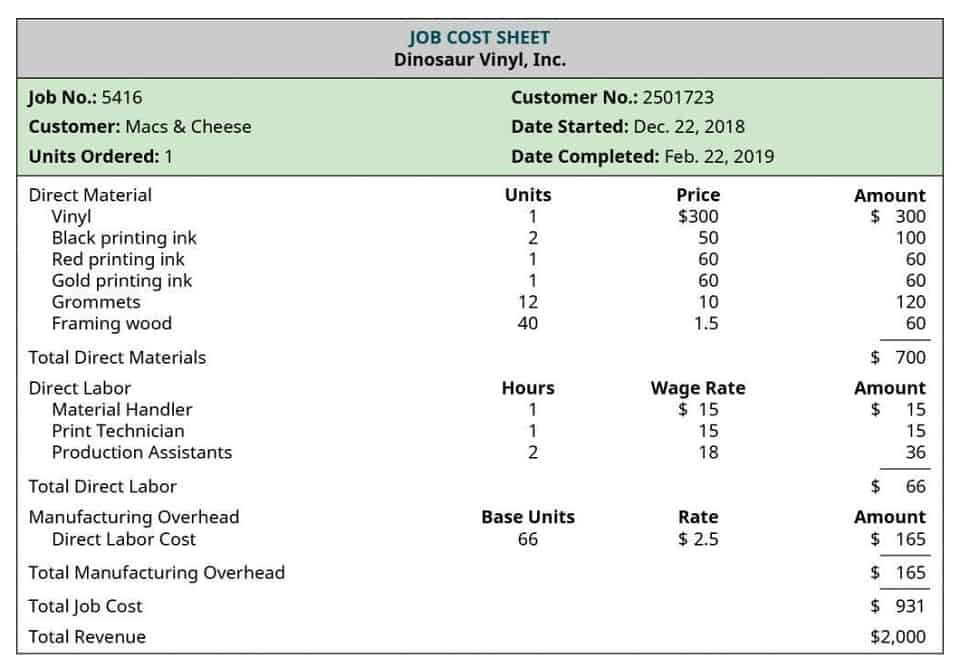
  • What’s happening here is that your ‘high’ overhead rate is simply masking inaccurate accounting.

Accounting ratios

Detailed financial records ensure better financial forecasting and help prevent overspending. Bookkeeping for construction firms requires an understanding of these specialized needs, which is the first step toward healthier finances. Once the https://blackstarnews.com/detailed-guide-for-the-importance-of-construction-bookkeeping-for-streamlining-business-operations/ costs have been categorized, monitoring expenses closely against the budget is important.

  • Detailed financial records ensure better financial forecasting and help prevent overspending.
  • In the construction industry, keeping accurate financial records is more than just a necessity, it’s the backbone of your business.
  • Consider the cost of insurance, travel, workers’ compensation, materials, subcontractors, equipment, and more.
  • Embracing these technological advancements is essential for future success in the industry.
  • Hard costs predominantly revolve around the tangible elements of a development project.
  • Even if you hire a professional firm, having an automated system that collects and stores the information will make it easier for them to perform your bookkeeping tasks.

This decentralized approach in construction promotes flexibility and responsiveness, as project teams can adapt to unique challenges and opportunities at each site. It enables effective utilization of local resources and expertise, reducing transportation costs and time. However, managing decentralized production requires robust coordination, communication, and planning to ensure seamless collaboration between teams.

bookkeeping for the construction industry

Installment method

Cash basis accounting is simpler and easier to manage, but accrual basis accounting provides a more accurate picture of your company’s financial health. Working with a certified bookkeeper or accountant specializing in construction accounting can greatly benefit your business. These experts possess in-depth knowledge and expertise in handling complex financial responsibilities such as job costing, payroll taxes, and reporting. The earned value report is a powerful financial tool that efficiently tracks construction task progress, identifying delays and budget overruns early in a project. It compares planned value, earned value, and actual cost to provide valuable insights from the project’s outset.

It summarizes project costs, income, and the difference between the two, providing valuable insights for each project. Unlike other reports, it offers flexibility in completion time, allowing contractors to assess project profitability whenever they find it suitable. By analyzing WIP data accurately, contractors can gain valuable insights into project profitability and identify potential discrepancies in billing or revenue recognition. This information allows for proactive management and adjustments, ensuring financial health and project success.

bookkeeping for the construction industry

  • Fixed-price billing, also known as lump-sum billing, involves a set contract price agreed upon before the project begins.
  • Industry workshops offer insights into the latest real estate accounting practices.
  • This approach ensures seamless handling of various project-related financials, enabling accurate tracking of expenses, revenues, and profitability across multiple endeavours.
  • Build tailored financial dashboards providing granular insights into any area of your construction business.
  • Here are ten tips that can help to simplify and improve the way you handle construction bookkeeping.
  • To optimize the construction process and improve the efficiency of your projects, it is highly recommended to consider using cloud-based solutions specifically designed for the construction industry.

Under SOP 81-1, revenue is also allowed to be computed using the Completed Contract Method.8 Under this method, contract revenues and costs are not recognized until the contract is substantially complete. AvidXchange provides comprehensive payment services tailored for companies needing high transaction volumes, which is often the case in construction AP. The right overhead percentage for your company is one that leaves you with a healthy amount of net profit. Most CoAs are too high-level and don’t provide the level of detail you actually need.